
Oga's Namahage: Japan's representative mask and costume culture
Oga City, a representative tourist destination in Akita Prefecture, is famous for its Namahage, a mask and costume culture that Japan is proud of and has been registered as a UNESCO Intangible Cultural Heritage.
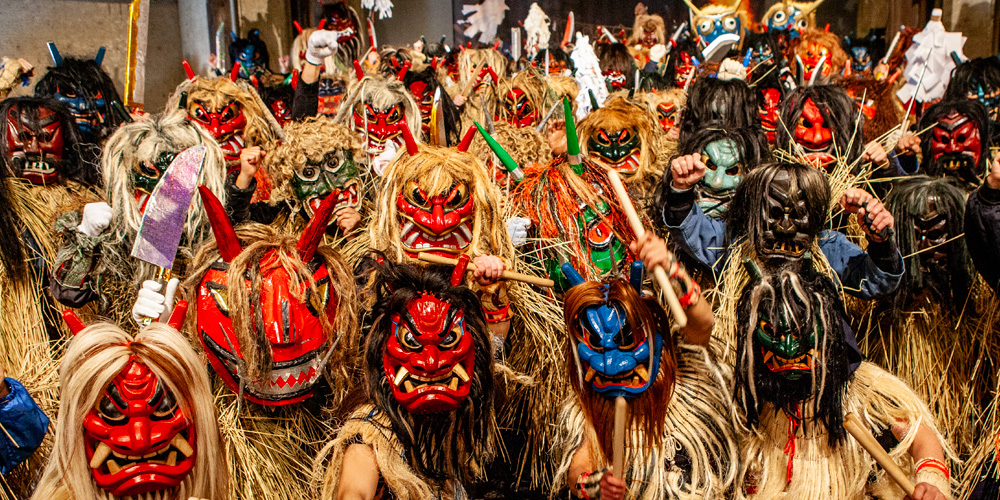
Namahage of Oga
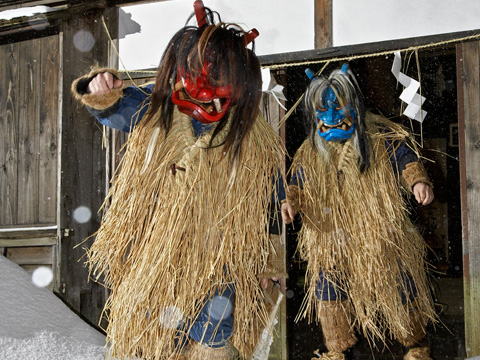
On the evening of New Year's Eve, young men from each village dress up as Namahage and go around the local houses shouting loudly, "Any crying children here?" and "Any children who won't listen to their parents?" To the people of Oga, Namahage are visiting gods who come at the turning point of the year to warn against laziness and bring good health, bounty from the fields, and bounty from the mountains and sea. Homes that welcome Namahage are treated with respect, preparing food and sake according to traditional customs.
The Namahage event in Oga City used to be held on Ko-Shogatsu (Little New Year), but is now held on New Year's Eve, December 31st.
Due to a lack of successors and other factors, the number of areas participating in the event has been decreasing year by year, but in recent years there has been a movement to revive it. In 1978, "Oga Namahage" was designated an Important Intangible Folk Cultural Property, and in 2018 it was registered as one of the "Visiting Gods: Masked and Costumed Gods" on the UNESCO Intangible Cultural Heritage list.
The diverse aspects of each district in Oga City
The Namahage masks vary in style from village to village, and are made from a wide variety of materials, including baskets, paper, and carved wood. The kede (costumes) are also made from straw in rice-producing villages, and old fishing nets in fishing villages, so there is a wide variety of masks and costumes in each village, and this diversity is another part of the charm of Namahage.
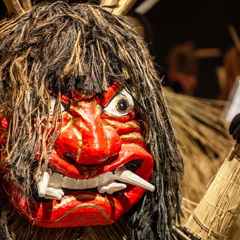
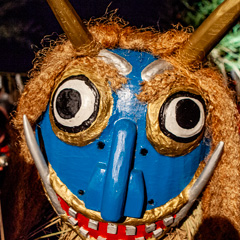
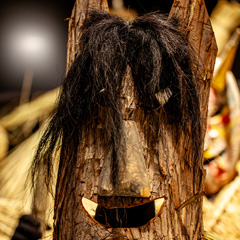
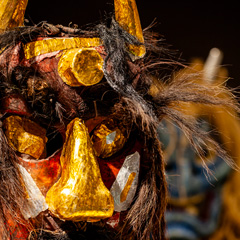
At the Namahage Museum, you can see all of these different aspects together.
The origin of the word Namahage
In winter, if you stay warm by the hearth for a long time, you will develop fire marks (fire spots) on your hands and feet.
In the local dialect, these are called "Namomi", and it is said that the name Namahage comes from the phrase "Namomi-hagi," which was used to warn against laziness.
"Namomi-hagi" also has the meaning of a blessing for the new year, and is given to new members of the household, such as children and first brides.
Places where you can experience Namahage
-
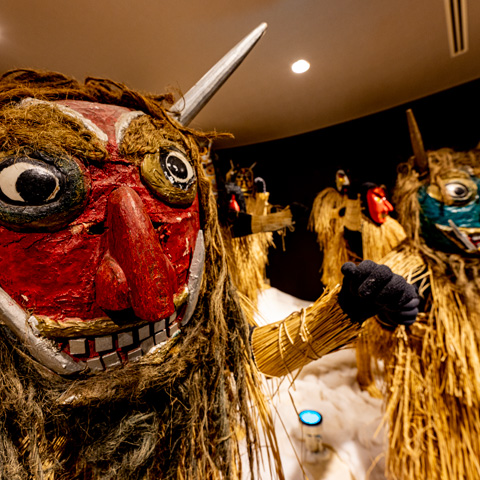
Namahage Museum
The museum has an atmospheric exterior made of stone masonry using Oga-produced kanfu stone, and an interior that makes abundant use of Akita cedar, and is home to an exhibition of valuable materials related to Namahage.The highlight is the display of over 150 different Namahage masks from each region of Oga, each with a slightly different style, all together in one place.
A five-minute walk from the Namahage Museum is Shinzan Shrine, a mystical area associated with the Namahage. The solemn and pristine grounds, surrounded by cedar groves, are known as a place associated with the Namahage, and are also home to the Namahage Sedo Festival, held every February. In the shrine's front garden stands a giant kaya tree (designated a prefectural natural monument) that is over 1,000 years old and is said to have been planted by Jikaku Daishi.
-
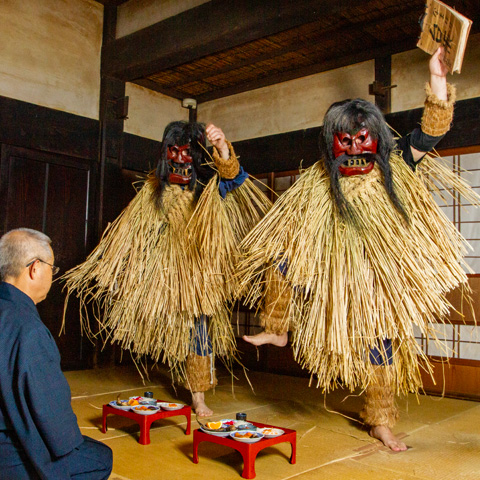
Oga Shinzan Folklore Museum
At the Oga Shinzan Folklore Museum, adjacent to the Namahage Museum, there are demonstrations of Namahage from the local Shinzan area, where you can see the Namahage rampaging through the house right before your eyes and feel their power up close.We recommend that you visit both the museum and the Namahage Museum.
-
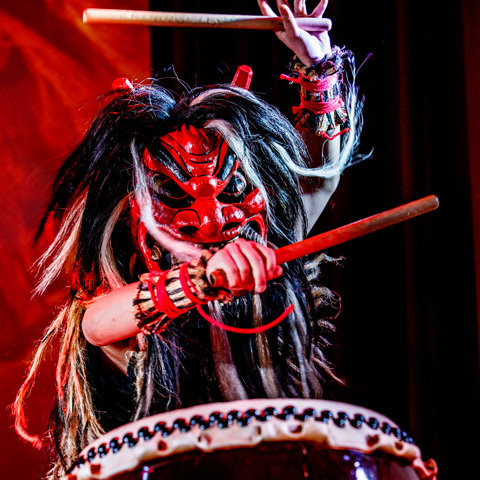
Namahage Taiko Drumming
This is an old yet new local performing art of Oga that combines the nationally designated Important Intangible Folk Cultural Property "Oga's Namahage" with the ancient Japanese "Wadaiko" drumming.
At "Gofu" in the Oga Onsen area, there is a permanent live performance of Namahage Taiko, and it has become such a hugely popular attraction that Akita is proud of that it is said that "it's worth going to Oga just to see this." -
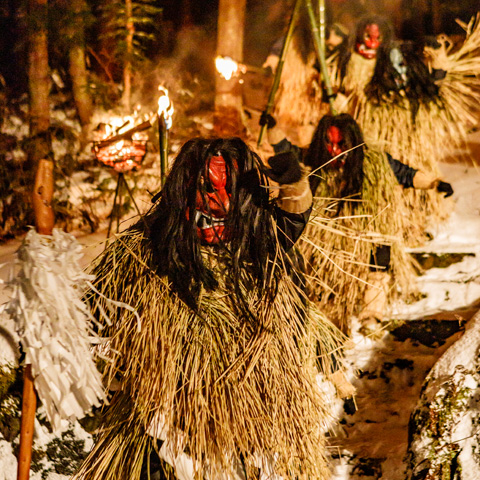
Namahage Sedo Festival
This tourist event combines the Shinto ritual "Saitousai" held on January 3rd at Mayama Shrine in Kitaura, Oga City, with the traditional event "Oga Namahage." It is held every Friday, Saturday, and Sunday in February, including the second Saturday, at Mayama Shrine.
Under the light of lit firelights in the temple grounds, the festival begins with the "Yunomai" (Yu no Mai), a purification kagura dance performance unique to the Oga region, and the "Chinkama Festival," a traditional hot water ritual. Then, in the "Namahage Iori" ceremony, young men dressed as Namahage are given purified masks by a Shinto priest and transformed into Namahage before returning to the mountain.
The festival continues with a reenactment of the traditional "Oga Namahage" New Year's Eve event; the solemn "Namahage Dance," choreographed by the late Akita-born contemporary dancer Ishii Baku and music by his son, the late composer Ishii Kan; a performance of the heroic "Namahage Taiko" drumming, now established as a local performing art; and the "Namahage Descendant," in which Namahage carrying torches descend from the snowy mountain.
The festival reaches its climax when the Namahage parade through the temple grounds, packed with spectators. The priests offer goma mochi (rice cakes) roasted over a firelight to the Namahage, who then return to their gods deep in the mountains.
The festival concludes with the "Sato no Namahage" performance, in which Namahage from all over Oga appear wearing different masks and costumes, allowing you to experience the distinctive diversity of Namahage right before your eyes.