
Recommended Attractions in Oga
The entire Oga Peninsula is designated as the "Oga Peninsula-Ogata Geopark," and is known for its dynamic, beautiful scenery that continues from the sea to the mountains. There are many scenic tourist spots, such as Nyudozaki and Kanpuzan, and the area has long been popular as a convenient driving spot for tourists and Akita residents alike.
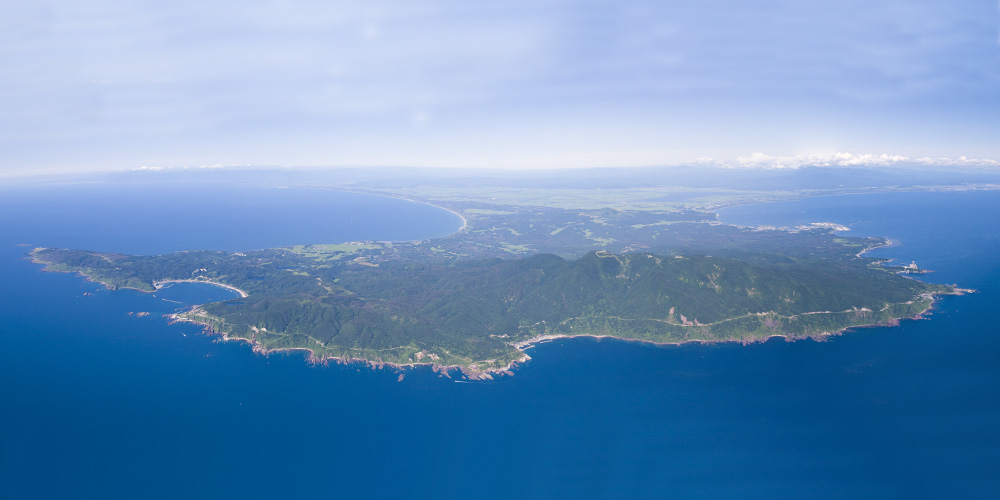
Natural landscape
-
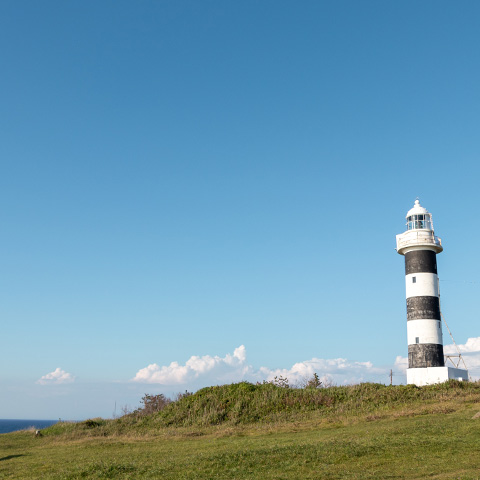
Nyudozaki
Located at the northwestern tip of the Oga Peninsula, Nyudozaki is a scenic spot that represents Oga and is visited by many visitors every year. The exquisite contrast between the green earth, blue sea, and sky is stunning.
It has also been selected as one of the "100 Best Sunsets in Japan," and is famous as a spot where you can watch the sun sink into the Sea of Japan.The lighthouse, which is the symbol of Nyudosaki, is popular as it is one of only 16 climbable lighthouses in Japan.
-
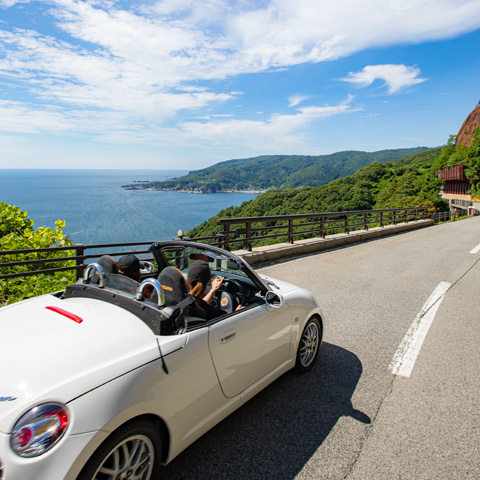
Spectacular West Coast
The mountains and the sea create a dynamic landscape of beauty. If you drive along Oga's west coast, which weaves its steep slopes down from the mountains to the sea, you will surely be captivated by the grandeur of nature.
-

Unosaki Coast
This coast stretches for about 200m, with shallow waters so shallow that the rocky surface of the seabed is exposed at low tide.
The scenery reflected on the mirror-like water surface has earned it the nickname "Akita's Uyuni Salt Flats," and it's a popular spot on social media. The circular rocky terrain and the stunning scenery of the wide coastline are truly symbols of Oga. This shallow coastline is rare even in Japan, and is a safe place for families with small children to play on the rocks. -
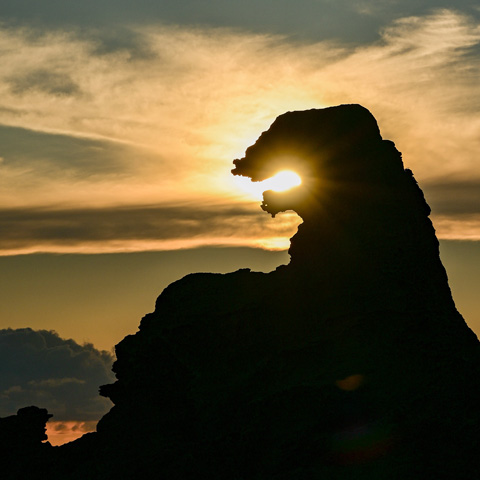
Strange rock formations "Godzilla Rock"
At sunset, the silhouette of Godzilla breathing fire emerges from the rocks at Shiosezaki in the southwest of the peninsula against the red sky in the background. This is a popular spot to watch the sunset.
-
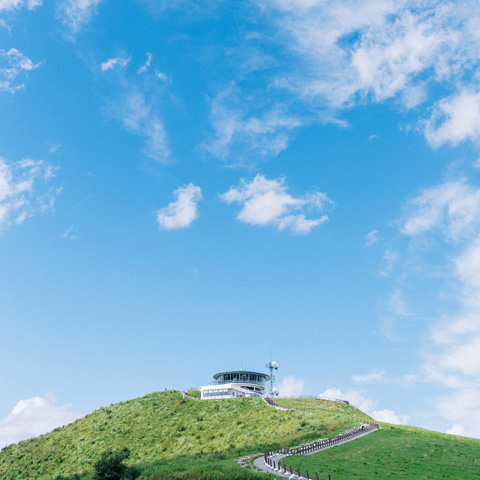
Mt. Kanpuzan, one of the three most scenic views in the world
It is one of the most famous mountains in Japan, with a gentle slope mostly covered in grassland, and it is easy to drive up to the summit, where you can enjoy a 360-degree view, making it an extremely popular spot for sunsets and night views.
There is now a rotating observation deck near the top, one of only a few in Japan, where you can also enjoy a meal.
There are also many famous places in the surrounding area that are steeped in legends and folklore, and although it is a low mountain at 355m, it has plenty of appeal to draw visitors.
Tourist facilities
-
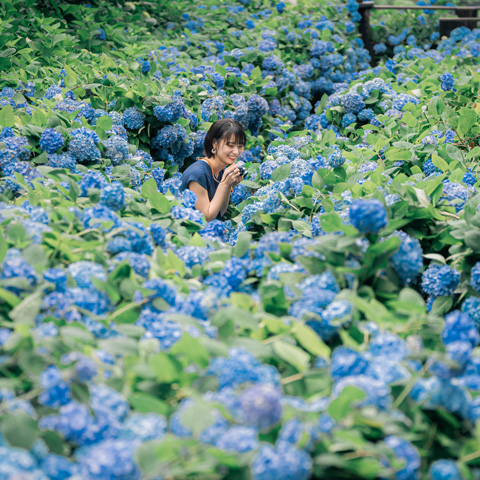
Hydrangeas at Unshoji Temple
The hydrangeas at Unshoji Temple in Kitaura have been gaining attention as a new attraction in Oga, having been selected as "Japan's Best Scenic Views: Must-See Before You Die! Official Website 2017," making them a must-see spot. Deputy Chief Priest Konaka has spent over 15 years lovingly cultivating the hydrangeas, which produce many flowers per plant, turning the entire area a deep blue when in full bloom. Behind them stretches the port town of Kitaura and the sea of Oga, creating a view that can only be seen here.
-

Oga Aquarium GAO
This aquarium is located in a prime location on the shores of the Sea of Japan.
Oga's Large Sea Tank holds 815 tons of water, and 2,000 fish from 40 different species swim around dynamically. Other popular attractions include Gota the polar bear, penguins, and seals.
The restaurant, which serves dishes made with local ingredients, is also highly acclaimed.
History and Culture
-
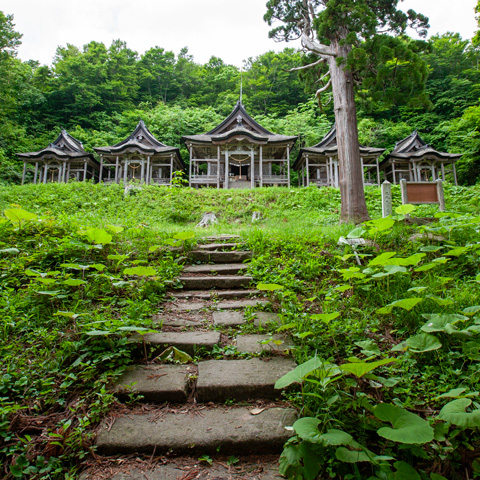
Akagami Shrine Goshado
After climbing the 999 stone steps, legendary for being built by demons, Akagami Shrine's Goshado Hall comes into view.
The five shrine buildings are said to have been built in the mid-Edo period, and rare ingenuity can be seen in the veranda, roof, pillars, and joinery. The Akagami of Akagami Shrine is said to refer to Emperor Wu of the Han dynasty, and Oga is home to many legends and tales related to Akagami and demons. Based on its style, the shrine inside Akagami Gongen Hall is estimated to have been built around the Muromachi period and was designated an Important Cultural Property of Japan in 1967. Akagami Shrine's Goshado Hall was also designated an Important Cultural Property of Japan in 1990 as an important building that showcases Akita Prefecture's early modern shrine and temple architecture.There are many mystical sights in the surrounding area, such as the "Sugatami Well" and the "Upside-Down Cedar."
-
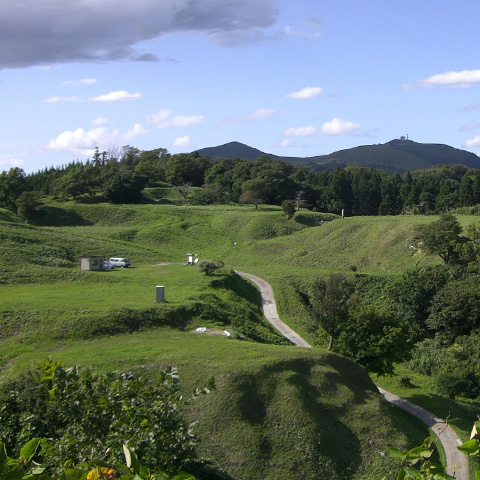
Wakimoto Castle Ruins
Wakimoto Castle Ruins, a nationally designated historic site and one of Japan's Top 100 Castles, was the castle of powerful Tohoku warlord Ando Chikasue during the Sengoku period, and is one of the largest in the Tohoku region.
The remains of the castle, including the earthworks used to defend it, the kuruwa (baileys) where buildings stood, and well remains, remain in excellent condition, and excavations have unearthed a large number of items, including ceramics, matchlock bullets, armor, and sword fittings.
The view from the castle ruins is also outstanding, allowing you to experience what it was like to be the castle lord.